


Luxury Brands and the Longevity Economy: Has Gen Z Become a Strategic Bias?
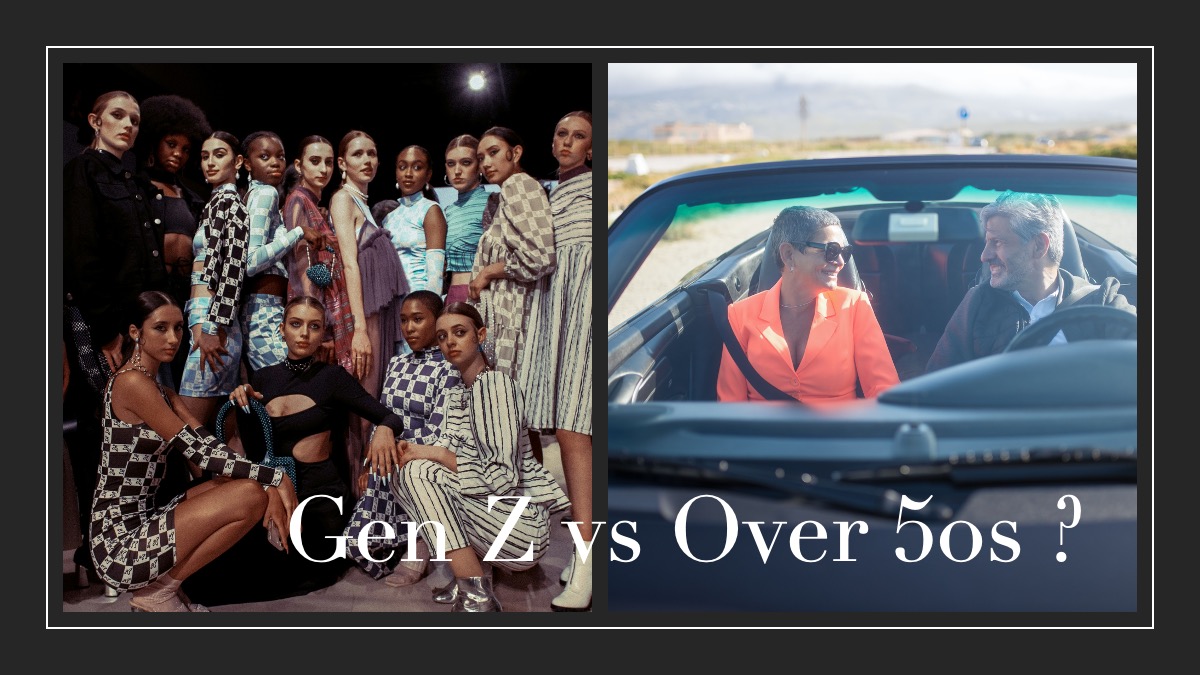
Over the past ten years, Gen Z has been the absolute protagonist of every conversation about the future of luxury.
Industry reports, conferences, market research, marketing strategies: everything seems to revolve around how to win over younger consumers. TikTok, gaming, the creator economy, phygital experiences, the metaverse, social commerce. It’s hard to find a presentation on the luxury business that doesn’t start from here.
And it’s absolutely understandable.
Gen Z represents the future, and it also has the discreet charm of youth. Maisons need to remain culturally relevant to new generations if they want to preserve their value in the long run.
Beyond the opinions, what if we checked the figures?
Who builds desire and who sustains the business
In luxury there are two dynamics that we often tend to conflate, but which don’t always coincide.
The first is brand desirability: being the brand everyone talks about, the one that sets trends, generates conversation, and influences contemporary culture.
The second is business sustainability: building revenue, margins, and lasting relationships with customers.
The two things are deeply connected, but not necessarily fueled by the same audience.
Many young people help make a brand desirable long before they can afford it.
Many mature customers, on the other hand, still represent a fundamental part of the industry’s revenue today.
The novelty isn’t Gen Z, it’s the Longevity Economy.
I believe one of the most important changes of the next twenty years won’t be generational, but demographic. We live longer. We stay healthy longer. We work longer. We travel longer. We consume for longer.
In other words, we are entering the era of the Longevity Economy, to use the expression found in official OECD reports. We talk continuously about Gen Z because it represents the future of luxury. But the present of luxury is often over fifty years old.
And today’s 50- and 60-year-old consumer doesn’t resemble the one from twenty or thirty years ago.
They often have a high spending capacity, and a lifestyle as active as that of a 40-year-old. They are digitally competent, they travel, they invest in their own wellbeing, and they keep seeking quality experiences.
Above all, they have two increasingly rare resources: time and wealth.
A paradox of luxury
In Europe the over-50 population represents an ever-larger share of society and holds a significant part of private wealth. Looking at Europe’s demographic structure, the median age of the population has now reached almost 45, and the over-50 and over-55 brackets represent an ever-larger component of society (Eurostat data[1]), in other words, the continent is ageing.
And yet, luxury communication continues to speak almost exclusively to the young. It’s an interesting paradox. Marketing discusses Gen Z, and the business often continues to be sustained by over-50 customers. Of course, this doesn’t mean brands should stop investing in new generations, that would be a mistake because Gen Z builds desire.
The Longevity Economy will probably build an increasingly important part of growth.
The Obsession with Youth
Regardless of age, there is an imperative that all generations seem to obey: ageing is forbidden.
The major luxury groups know this well. Looking at recent years, while fashion has gone through slowdowns tied to the economic cycle and shrinking consumption, beauty, and skincare in particular, has shown superior resilience and capacity for innovation. It’s no coincidence that companies like L’Oréal continue to invest billions in acquiring brands specialized in skincare with a strong scientific and dermatological component, considered one of the categories with the greatest growth potential.
Looking closer, there’s an even more interesting aspect: in recent years the language of the industry has changed. For decades we talked about anti-ageing. Today we increasingly talk about longevity skincare. It isn’t just a semantic choice, it’s a cultural shift. The goal is no longer to fight age, but to preserve health, vitality, and quality of life for longer.
The images that populate the collective imagination tell this transformation perfectly. Demi Moore, who at 63 looks like a woman in her forties, wins a Golden Globe for The Substance, a film that reflects precisely on today’s obsession with youth. Jennifer Aniston, at nearly sixty, maintains an image strikingly close to the one audiences first knew her by in the ’90s, when she starred in Friends
The list of celebrities or public figures in stunning shape who continue to be icons of beauty and style keeps getting longer every day.
And the phenomenon isn’t limited to celebrities.
More and more executives, entrepreneurs, and prominent figures in their 60s, 70s, and even 80s continue to lead companies, innovate, and make headlines well past seventy.
Perhaps the real revolution isn’t trying to look younger. It’s having redefined what it means to be “old.”
If longevity is redefining the way we live, work, travel, and consume, why does it still occupy such limited space in luxury marketing strategies? Doesn’t it risk becoming the real strategic bias of the coming years?
Why Maisons are investing in hotels, spas, and wellness
In recent years we’ve witnessed an interesting phenomenon.
More and more Maisons are investing in: hotels, spas, restaurants, cafés, beauty, wellness, hospitality. Dior Spa, Bulgari Hotels, Cheval Blanc, Armani Hotels, Louis Vuitton Cafés…
These initiatives are often read simply as brand extensions. I believe there’s another reason too. Luxury is progressively shifting its center of gravity: from product to platform of experiences.
It no longer sells only objects. It sells quality of life.
It sells time, wellbeing, culture. Entertainment.
It creates narrative worlds where age stands still and what matters is experience and emotion.
That’s exactly what a society that lives longer requires.
And retail?
The boutique is changing function too. Less and less space devoted to display. More and more space devoted to experience. Lounges, private appointments, beauty consultations, repair services, hospitality. The store is no longer just the place of purchase. It becomes a place where the customer invests time.
And it’s precisely time that’s becoming the new luxury.
A final thought
I don’t believe the future of luxury belongs to Gen Z. But I don’t believe it belongs to Gen X or Baby Boomers either. I believe it belongs to the brands capable of understanding that generational categories, on their own, are no longer enough. The real strategic bias isn’t investing too much in Gen Z, it’s continuing to interpret the luxury market through generational categories, while society is changing according to a much deeper logic: that of longevity.
Perhaps we should start designing products, services, and spaces not for a given age, but for a longer life, a healthier one, richer in experiences.
Because if it’s true that Gen Z represents the future of brand desirability, the Longevity Economy could represent the future of the business.
Longevity changes the way we spend our money, and above all it changes the way we spend our time, and luxury is following precisely this transformation.
That’s why it opens hotels, spas, cafés.
That’s why it organizes exhibitions, builds foundations, creates events.
That’s why it invests in entertainment.
Luxury isn’t just trying to sell you something. It’s trying to occupy an ever-larger part of your free time, regardless of your age.
[1] Median age in the EU increased by 2.1 years since 2015
https://ec.europa.eu/eurostat/web/products-eurostat-news/w/ddn-20260213-2?utm_source=chatgpt.com
Related Posts
-

NOSTALGIA MARKETING
10/09/2025 -

Branding Issues, E-commerce and Smart Working, during pandemic
25/05/2020 -
Shifting Business Models, Values and Emerging trends following the Coronavirus Impact
29/03/2020 -
RUNNING A START-UP BUSINESS
09/07/2019 -
Design Trends
29/09/2017